
Redressing epistemic injustice in global health: harnessing community knowledge systems
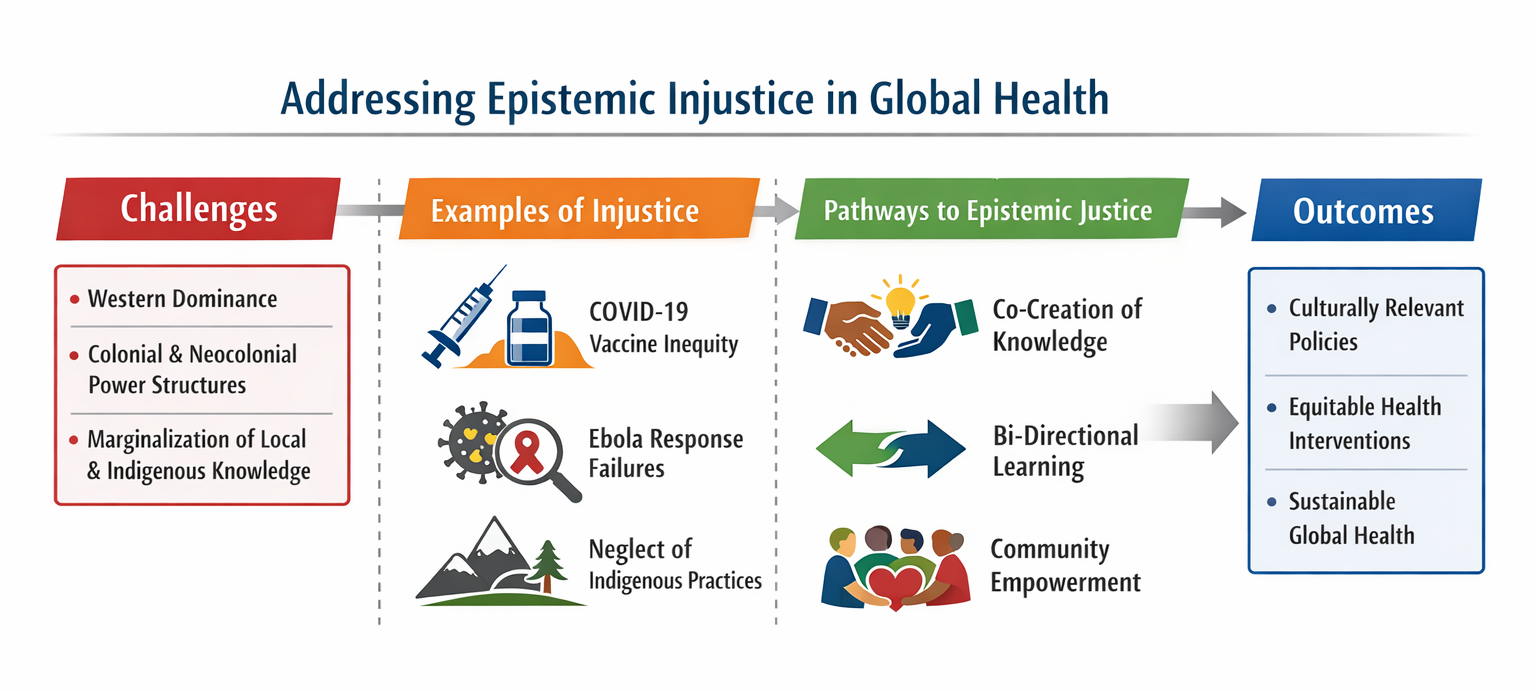
Epistemic injustice in global health continues to privilege Western knowledge systems while marginalising community and indigenous epistemologies, particularly in low- and middle-income countries. Colonial and neocolonial power asymmetries shape knowledge production, policy formulation, and implementation, often resulting in ineffective, resisted, or inequitable health interventions. Examples from COVID-19 vaccine policies, Ebola responses, and indigenous environmental and health practices illustrate the limitations of externally imposed biomedical approaches. Greater recognition of community knowledge systems, alongside bi-directional learning and genuine co-creation of knowledge, is essential to address these imbalances. Integrating local epistemologies into global health practice is critical for achieving culturally responsive, equitable, and sustainable health policies and interventions.